Every safety case written for a commercial humanoid robot in the past five years was written with a factory in its head. Fixed shift schedules. Known floor layouts. Trained operators nearby. Emergency-stop cords within reach. A home has none of these, and three companies are now selling into one anyway.
Executive Summary
2026 is the first year in which walking humanoid robots are being commercially delivered to private residences. 1X Technologies has opened production at its Hayward, California factory and is shipping its NEO robot to early-access customers at $20,000 or $499 per month. Figure AI has begun alpha testing Figure 03 in real homes. Tesla has named the home as a target for Optimus by end of 2027. Each company’s existing safety framework was developed for industrial settings. The home removes the environmental controls those frameworks depend on and adds a new class of hazards, from vulnerable occupants to always-on privacy exposure, that industrial safety standards do not address.
The gap between what existing standards cover and what a defensible home safety case must contain is the central strategic and regulatory risk in this market.
The Market That Does Not Yet Exist at Scale
The global humanoid robot market in 2025 was a factory story. Counterpoint Research estimates approximately 16,000 units shipped globally, with China accounting for over 80% of volume and the top five vendors holding 73% share. Omdia puts the figure lower, at roughly 13,300 units, because it excludes certain wheeled dual-arm platforms that Counterpoint counts as humanoid.
Goldman Sachs’s September 2026 revision to its humanoid forecast, raising its 2035 projection to approximately $138 billion on 6.5 million units, identified logistics, warehousing, and automotive as the primary growth drivers through the forecast period. The consumer home market remains what Goldman Sachs called in its February 2024 note a 2030 to 2035 story, dependent on cost inflection points and AI capability demonstrations not yet achieved at commercial scale. The honest label for 2026 is that home humanoids became orderable, not that they arrived.
H1 2026 brought a step-change in volume: Counterpoint Research counted more than 22,000 units shipped globally in the first half, nearly 300% year-over-year growth. AgiBot led with approximately 9,700 units; Unitree followed with over 7,000. Both companies are industrial and logistics-oriented. Neither has announced a consumer home product.
Home humanoid robots: Market Share by Units (h1 2026 shipments, counterpoint)
Three Companies, One Unstructured Environment
The three companies named specifically as targeting the home are 1X Technologies, Figure AI, and Tesla. Their positions differ sharply.
1X Technologies is the clearest operational entrant. It opened pre-orders for NEO in October 2025 at $20,000 or $499 a month, selling out its 10,000-unit first-year production capacity within five days, and began a staggered delivery rollout from its Hayward, California factory in late April 2026. As of July 2026, no customer delivery had been independently verified. When NEO’s onboard model, Redwood, cannot complete a task, a 1X teleoperator takes over.
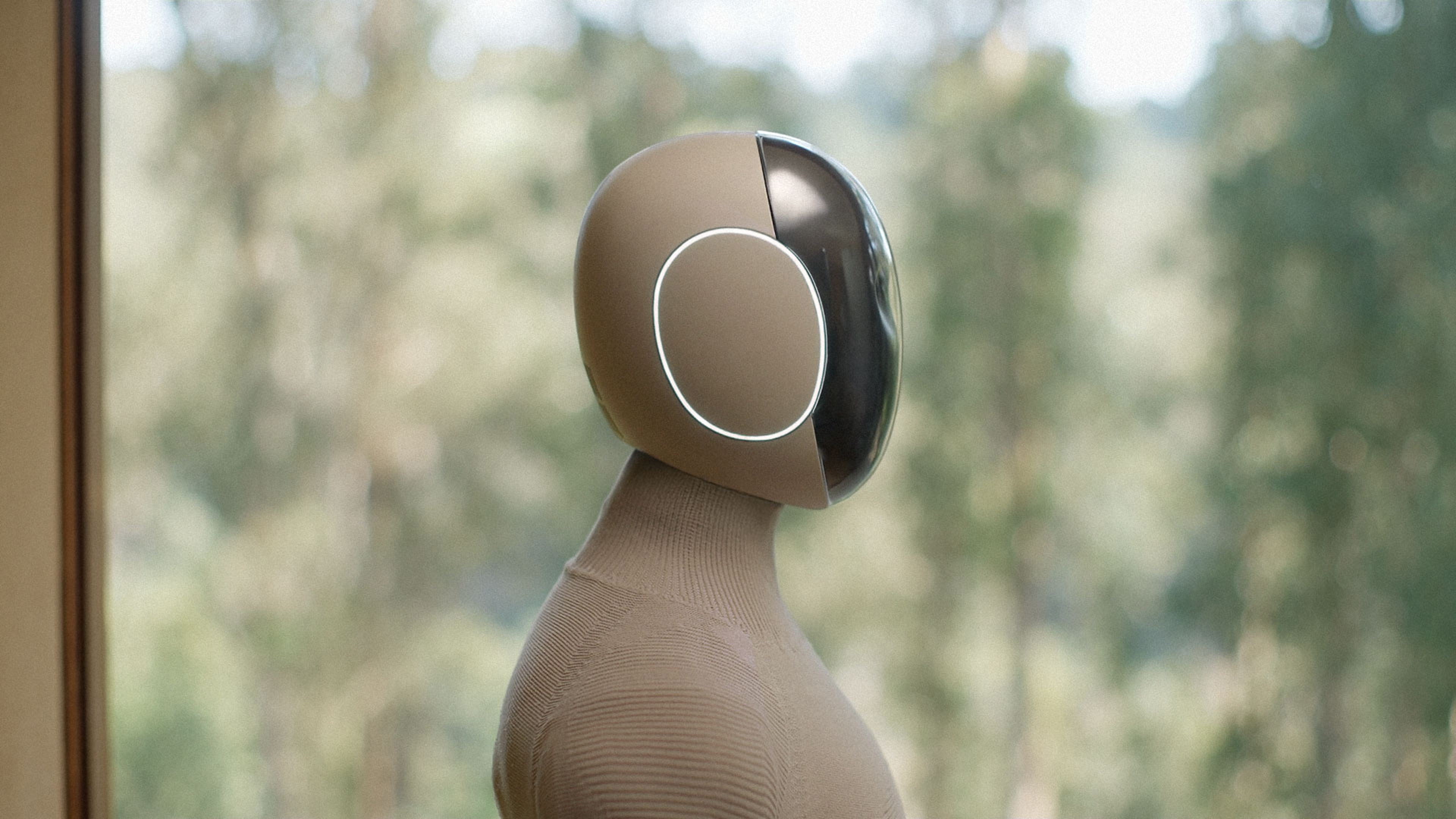
Figure AI has named the home as a target for Figure 03, which was designed with soft washable textiles, multi-density foam over pinch points, a drop-tested structural battery, and wireless step-on charging. As of July 2026, no public consumer price exists, no pre-order page is open, and every Figure 03 unit built has gone to internal programs or BMW Spartanburg. The company is simultaneously in active discovery in the Gruendel whistleblower lawsuit, which Figure disputes, in which a former Head of Product Safety alleged that Figure 02 had no formal safety procedures, incident-reporting systems, or risk-assessment processes at the time of his hire, and that Figure 02’s hand had carved a quarter-inch gash into a steel refrigerator door during a malfunction. No Figure 03 injury has been publicly reported.
Tesla’s position is the most speculative. Elon Musk stated at Davos in January 2026 that Optimus would be available to private consumers by end of 2027 at a price below $30,000. On the Q4 2025 earnings call, he acknowledged that robots were still in R&D and performing no useful work in a material sense. As of mid-2026, no Optimus has shipped to any external customer.
Three companies name the home; only 1X is shipping there, and none have reached high autonomy
What the Home Removes
Factory safety cases rest on assumptions that the home systematically violates.
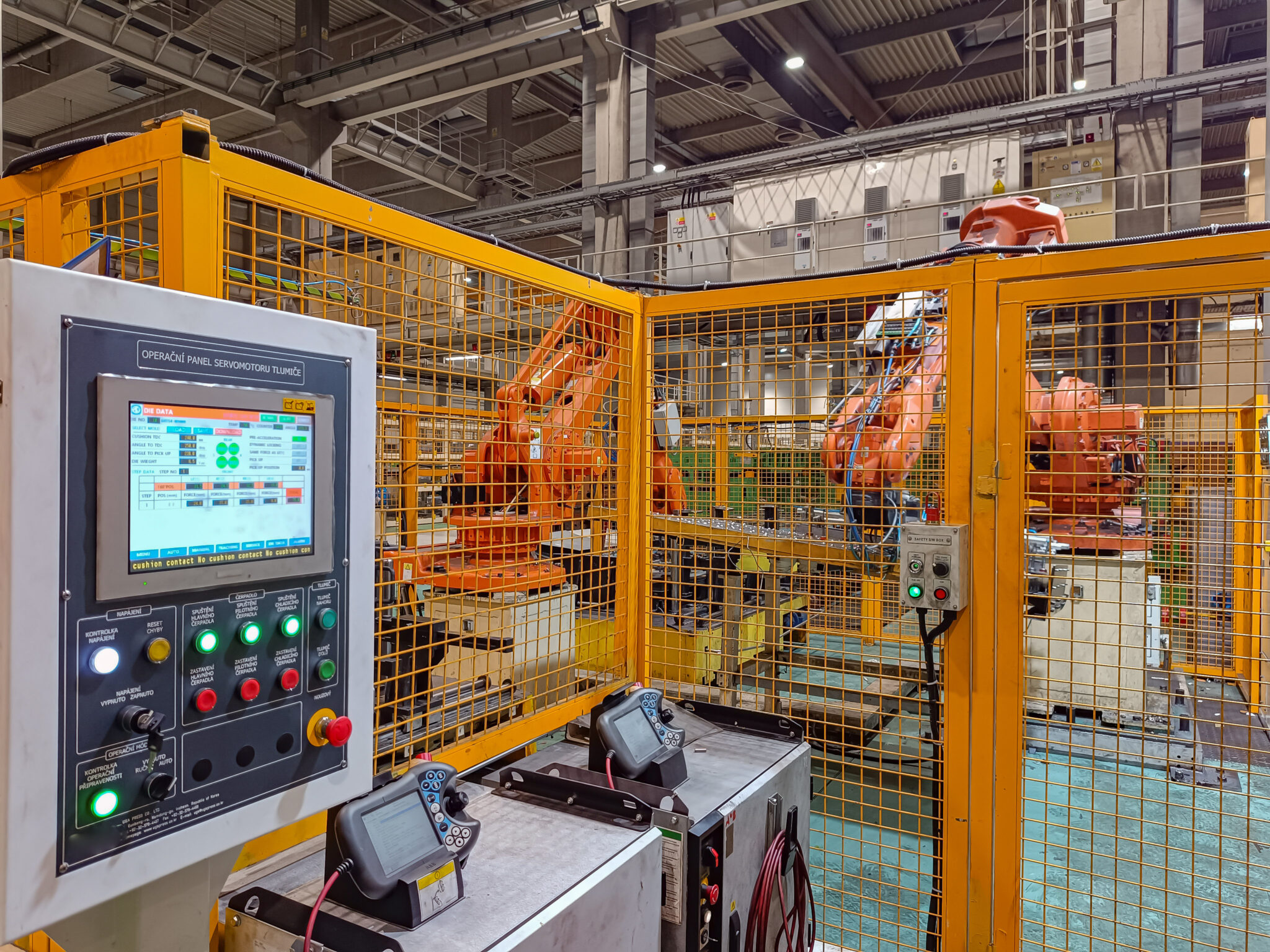
Industrial humanoid deployment assumes a controlled, partially structured environment: known floor topology, fixed obstacle sets, defined task sequences, trained co-workers who understand robot behavior, and an operator or safety engineer reachable within seconds. The robot’s risk assessment is built against this envelope. Remove it and the envelope collapses.
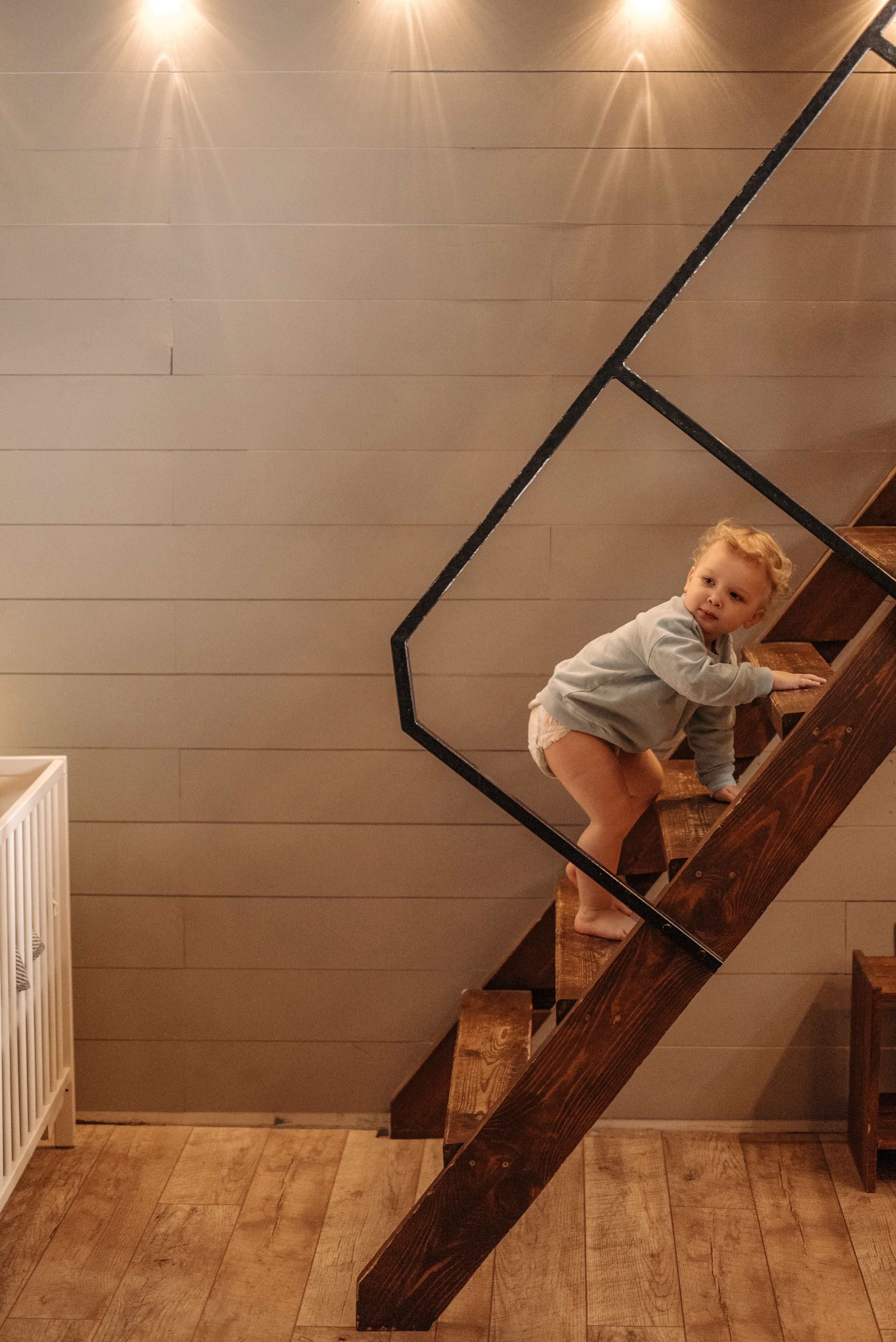
Homes present unstructured, dynamically changing physical environments. Furniture moves. Children leave objects on stairs. Pets cross paths without warning. A robot that has been validated against its training distribution may encounter a scene its policy has never processed. Physical Intelligence’s π0.5 model demonstrates that a generalist robot policy can clean up an entirely new room without task-specific retraining, but that demonstration represents laboratory state-of-the-art, not the shipped baseline. The Robot Report’s analysis in late 2025 concluded that no humanoid in 2026 can complete a full household chore from start to finish without intervention.
The fall hazard is qualitatively different in a home. ISO 25785-1, the draft standard for bipedal robots, is developing fall-hazard assessment frameworks explicitly for this risk: an uncontrolled collapse on power loss puts a biped falling as one rigid piece onto whoever or whatever is on the floor below it. As Tech Briefs reported on the draft, the same standard’s scope is explicitly limited to industrial workspaces. It does not address the home.
Vulnerable occupants are the sharpest departure from the factory case. An industrial facility has no children, no elderly residents with mobility limitations, no sleeping occupants. A home may have all three simultaneously. ISO 13482:2014, the primary international safety standard for personal care robots, acknowledged at publication that no exhaustive internationally recognized data on human impact pain and injury limits existed. The revision currently in final approval as ISO/FDIS 13482 has not fully closed that gap. IEEE Spectrum reported in May 2026 that the proposed update addresses hazard identification and risk assessment but does not set limits, propose testing methods, or include enforcement mechanisms adequate for the complexities of human-robot collaboration in homes.
What the Home Adds
The home introduces hazards with no industrial analogue.
The first is continuous privacy exposure. A home humanoid with cameras, microphones, spatial mapping sensors, and remote human operators is collecting intimate behavioral data inside a private residence around the clock. 1X’s teleoperation model, called Expert Mode, places a human VR-headset operator inside the robot’s sensor stream when the onboard AI cannot handle a task. 1X has disclosed privacy controls including owner-approved sessions, no-go zones, and people-blurring in the operator’s view, but this disclosure appears in press coverage rather than on the product page. Analysts identify the first serious incident or legal subpoena for robot footage as the event that will set industry-wide norms.
The threat surface is inherent to any connected robot with an embedded AI stack: the home sensor suite, cameras, microphones, and spatial mapping, becomes an attack vector if the underlying system is compromised.
The second novel hazard is the autonomy gap marketed versus shipped. At launch, NEO’s Redwood model limits autonomous operation to simple tasks: fetching objects, opening doors, turning off lights, light tidying. Complex chores including laundry and dishwashing rely on Expert Mode teleoperation. Hill Dickinson’s February 2026 legal analysis noted that 1X has deliberately restricted its robots’ ability to handle heavy, sharp, or hot objects as a capability-limitation safety strategy. The gap between marketed capability and shipped autonomy is the central technology risk for the home segment, and it is not disclosed on 1X’s product page.
A defensible home safety case requires six documented layers that no current standard mandates
The Safety Case That Does Not Yet Exist
The standards infrastructure for home humanoid deployment is structurally incomplete.
In the United States, the CPSC is in what The Robot Report described as a wait-and-see posture on consumer robotics. Humanoid-specific standards such as ASTM WK73939 are not expected to be ratified until 2027. Federal regulatory philosophy under Executive Order 14179 emphasizes market-driven development over prescriptive federal frameworks. A company selling home humanoid robots nationally must navigate at least 15 divergent state privacy and AI frameworks, none of which were designed for always-on devices with cameras, microphones, spatial mapping, and behavioral pattern analysis inside private residences.
In Europe, the regulatory stack for a connected home humanoid overlaps five binding instruments simultaneously: the Machinery Regulation 2023/1230 (mandatory from January 2027), the EU AI Act as amended by Regulation 2026/1744 (high-risk obligations for AI embedded in regulated products applying from August 2028), the Cyber Resilience Act, GDPR, and the revised Product Liability Directive. The technical file required under the Machinery Regulation must be kept for 10 years, and a robot integrated into a home constitutes a complete machine requiring its own Declaration of Conformity. No Commission guidance specific to residential deployment has been issued.
What a defensible home safety case must contain goes beyond current standards. It requires, at minimum: a validated fall-hazard assessment against realistic home populations including children and elderly residents, with quantified impact force limits; an autonomy boundary specification that clearly defines what the robot will refuse to do rather than only what it can do; a teleoperation privacy architecture with data minimization controls disclosed to the consumer before purchase rather than in press coverage; a cybersecurity threat model specific to the home sensor suite; a post-market incident reporting mechanism capable of distinguishing AI-induced failures from hardware failures; and an update governance framework specifying how policy changes affect previously validated safety properties. None of these appear in the existing ISO or IEC standards applicable to home humanoids. None of the three companies naming the home have published a document addressing all of them.
Parallax’s August 2026 analysis of Figure AI made the parallel point for an industrial biped, where, if the learned layer in Helix 02 is the component that keeps Figure 03 upright, the machine already contains an Annex I Part A component on a plain reading, and every update that changes balance behavior becomes “a modification to a safety-related component, under a regulation that treats substantial modification as re-manufacture,” a reading that turns on a safety-function partition Figure has not disclosed.
Economics of Getting There
The unit economics of home humanoid deployment compound the safety challenge. 1X’s $499 per month subscription model only works if each robot’s paid teleoperator time stays a small fraction of the day at US labor rates. The actual teleop burden per unit will determine whether the price is viable, and that figure has not been disclosed. At $20,000 purchase price the break-even against the subscription is approximately 40 months.
Chinese manufacturers are compressing the price floor available to Western operators. Unitree’s G1 lists at $13,500 and its R1 at $5,900. BofA Global Research estimates a China-supply-chain humanoid bill of materials at approximately $35,000 in 2025, falling to below $17,000 by 2030. McKinsey’s April 2026 analysis found that building Tesla’s Optimus Gen 2 without Chinese suppliers would cost approximately three times as much, with BOM rising from roughly $46,000 to roughly $131,000.
Actuators remain the dominant cost item, consistently estimated at 40 to 60% of total bill of materials. McKinsey’s April 2026 teardown found a tenfold difference between distributor list price and manufacturing should-cost for actuators, calling it the single largest opportunity for cost reduction. Unitree’s disclosed gross margin for its humanoid segment was 62.9% in the first three quarters of 2025, but its humanoid average selling price fell 35.7% year-over-year in the same period: high margins coexisting with rapid price deflation is a combination that squeezes revenue even as unit profitability holds.
Outlook: The Constraint Is Not the Hardware
The technical trajectory is pointing in one direction. Vision-Language-Action models have replaced 109,504 lines of hand-engineered C++ in Figure’s Helix 02. Physical Intelligence’s π0.5 demonstrates generalist policies cleaning entirely new rooms without retraining. NVIDIA’s GR00T N1 provides a foundation model layer that any hardware vendor can run on Jetson Thor hardware. 1X NEO ships with Jetson Thor as its onboard brain. The inference stack is commoditizing faster than the safety stack is being built.
A Chinese industry research report from June 2026 identifies 2027 to 2028 as the critical window when out-of-distribution generalization barriers in embodied AI may develop real cracks, potentially triggering non-linear market expansion. Goldman Sachs and Morgan Stanley project meaningfully different timelines: the former puts consumer home viability at 2030 to 2035, while the latter, as Tesla’s own annual report relays it, expects adoption to be “relatively slow until the mid-2030s, accelerating in the late 2030s and 2040s.” The spread in analyst forecasts reflects genuine uncertainty about when AI capability and hardware cost will cross the threshold that makes unsupervised residential deployment safe enough to insure, regulate, and sell at scale.
The binding constraint in 2026 is not the hardware and is not the AI. It is the absence of a credible safety case for the deployment environment these three companies have named. A robot that can fold laundry in a lab cannot legally or ethically be deployed beside a sleeping child under frameworks built for factory floors. The first company to produce a documented, testable, third-party-reviewed home safety case will have built something that no standard currently requires but that every regulator and insurer will eventually demand. That is not a compliance burden. It is a competitive position.
New research by email. Roughly one piece a month.
Sources (49)
- GOLDMANSACHS
The global market for humanoid robots could reach $38 billion by 2035 | Goldman Sachsgoldmansachs.com
- INVESTING
Goldman Sachs raises humanoid robot forecast, sees auto role | Investing.cominvesting.com
- SEC
- COUNTERPOINTRESEARCH
Global Humanoid Robot Installations Reach 16,000 Units in 2025 | Counterpoint Researchcounterpointresearch.com
- COUNTERPOINTRESEARCH
Global Humanoid Robot Shipments Soar Nearly 300% YoY in H1 2026 | Counterpoint Researchcounterpointresearch.com
- FORBES
Humanoid Robot Shipments Up 300%: Up To 30,000 So Far In 2026 | Forbesforbes.com
- SIFTED
OpenAI-backed startup aims to deliver in-home humanoid robots in 2026 | Siftedsifted.eu
- FORBES
1X Kicks Off Full-Scale Production Of Humanoid Robot Neo – Forbesforbes.com
- GLOBENEWSWIRE
1X Opens NEO Factory in Hayward, CA – GlobeNewswireglobenewswire.com
- HEISE
1X to deliver humanoid household robot Neo to US customers in 2026 – heise onlineheise.de
- SEEKINGALPHA
Figure CEO says company will launch home robots, start alpha testing 'this year' – Seeking Alphaseekingalpha.com
- NOTEBOOKCHECK
Optimus as a household helper: Elon Musk plans to bring Tesla robots into private homes starting in 2027 – Notebookchecknotebookcheck.net
- TECHNODE
China's AgiBot leads global humanoid robot shipments in 2025, Omdia says – TechNodetechnode.com
- BLOOMBERG
Chinese Firms Dominated Global Humanoid Robot Shipments in 2025 – Bloombergbloomberg.com
- SCMP
China's Unitree ships more than 5,500 humanoid robots in 2025 – SCMPscmp.com
- DIRECTINDUSTRY
A Deep Look Into China's Humanoid Robot Market – DirectIndustry e-Magazineemag.directindustry.com
- THEROBOTREPORT
Vision-language-action models are the next leap in autonomous robotics - The Robot Reporttherobotreport.com
- PI
π0.5: A VLA with Open-World Generalization – Physical Intelligencepi.website
- THEROBOTREPORT
Teleop, not autonomy, is the path for 1X's Neo humanoid - The Robot Reporttherobotreport.com
- BLOOMBERG
China's Unitree Offers a Humanoid Robot for Under $6,000 - Bloombergbloomberg.com
- 1X
- THEROBOTREPORT
NEO humanoid designed for household use, available for preorder - The Robot Reporttherobotreport.com
- BANKOFAMERICA
Physical AI, part 2: Humanoid robots — BofA Global Research, March 2026institute.bankofamerica.com
- MCKINSEY
Humanoid robots: Crossing the chasm from concept to commercial reality — McKinseymckinsey.com
- MCKINSEY
Scaling the humanoid robotics supply chain into billion-dollar wins — McKinsey, April 2026mckinsey.com
- KR-ASIA
What is the secret behind Unitree's high gross margins? — KrASIA, March 2026kr-asia.com
- HUNTON
EU Digital Omnibus on AI Enters Into Force | Hunton Andrews Kurthhunton.com
- EUROPA
Regulation (EU) 2026/1744 – Official Journal of the EUdata.europa.eu
- ISO
ISO/FDIS 13482 – Robotics: Safety requirements for service robotsiso.org
- ISO
ISO 13482:2014 – Robots and robotic devices: Safety requirements for personal care robotsiso.org
- IEEE
Domestic Humanoid Robot Safety Standards Are Shifting – IEEE Spectrumspectrum.ieee.org
- TECHBRIEFS
Safety in Motion: Setting the Standard for Humanoid Robots – Tech Briefstechbriefs.com
- ACM
Setting Standards for Humanoid Robots – Communications of the ACMcacm.acm.org
- THEROBOTREPORT
The Great Robot Race: How Companies Balance Speed to Market and Compliance in the U.S. – The Robot Reporttherobotreport.com
- AI-FRONTIERS
The Robot in Your Living Room Has No Rulebook – AI Frontiersai-frontiers.org
- NORTONROSEFULBRIGHT
Colorado Enacts Revised AI Law – Norton Rose Fulbrightnortonrosefulbright.com
- CMS
Physical AI: Embodied AI Gives Rise to New Legal Requirements – CMS Lawcms.law
- WILSONELSER
Humanoid Robots in the Home — Wilson Elserproductliabilityadvocate.wilsonelser.com
- GOLDMANSACHS
Humanoid Robots: Sooner Than You Might Think | Goldman Sachsgoldmansachs.com
- HILLDICKINSON
Humanoid robots and the law - preparing for a new era of risk | Hill Dickinsonhilldickinson.com
- FAXIANGONGCHANG
2026 China Humanoid Robot Industry Market Scale and Competitive Landscape Deep Research Report — Tianxia Gongchang Researchfaxiangongchang.com
- THENEXTWEB
1X Starts Shipping NEO Humanoid Robots to US Homes — The Next Webthenextweb.com
- CNBC
China built robots that can do backflips – but can they make money? - CNBCcnbc.com
- CNN
World's top humanoid robot maker Unitree surges in blockbuster market debut in China - CNN Businesscnn.com
- CHATHAMHOUSE
Is China's humanoid robot industry a bubble? - Chatham Housechathamhouse.org
- BANKOFAMERICA
Humanoid robots 101 — BofA Global Research, April 2025institute.bankofamerica.com
- RESTOFWORLD
China is winning the humanoid robot race while Tesla's Optimus lags | Rest of Worldrestofworld.org
- EUROPA
Regulation (EU) 2024/1689 – EU AI Acteur-lex.europa.eu
- EUROPA
Regulation (EU) 2023/1230 on machineryeur-lex.europa.eu