Executive Summary
The United States is attempting to wire the most capital-intensive computing buildout in history through an electrical grid that cannot reliably source its most critical component. Large power transformers, the heavy industrial units that step voltage up and down across the bulk transmission system, are in acute shortage. Standard units now carry lead times averaging 128 weeks in Wood Mackenzie’s second-quarter 2025 survey, generator step-up transformers average 144 weeks, and some extra-high-voltage orders stretch to four years. Against that backdrop, Wood Mackenzie projects a 40% supply deficit for power transformers in 2025, with the generator step-up segment running essentially out of available capacity.
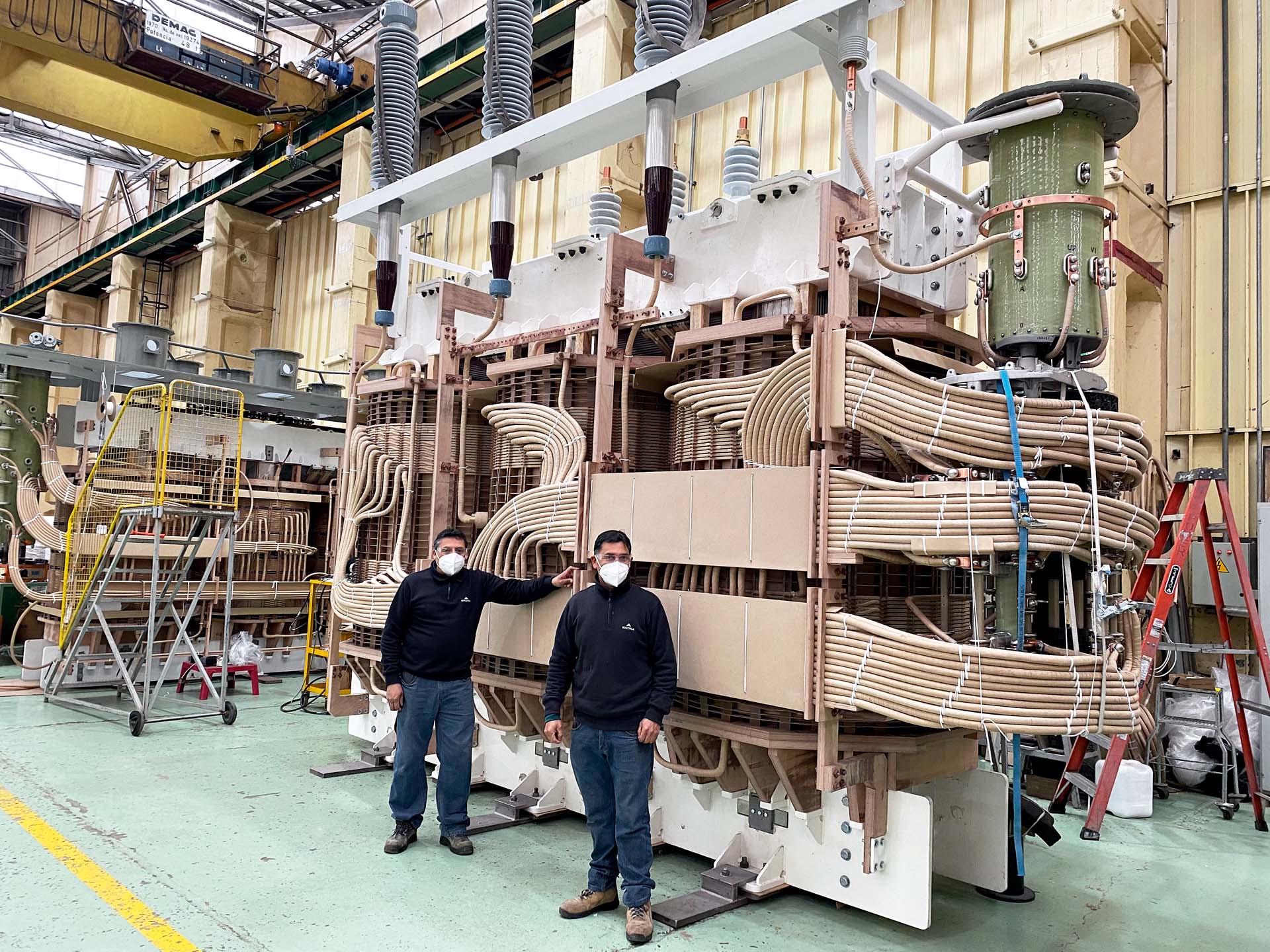
Those lead times are not a queue management problem. Each unit is a custom engineering project: a core wound from steel cut to a specific design, conductors formed by hand, tested destructively before it ships, and installed into a live system during a window the grid operator has to find. The assembly shown below, a 100/133 MVA unit that required a Chilean factory to be re-equipped before it could be built, is one data point for why the announced wave of new North American plants will add slots without compressing the time each slot consumes.
The structural causes of the shortage are specific and interlocking: the United States imports roughly 80% of its large power transformers, relies on a single domestic mill for grain-oriented electrical steel, and cannot produce the highest-efficiency grade of that steel at all. Federal policy has recognized the problem, invoking the Defense Production Act twice in four years, but regulatory responses have so far created as many complications as solutions. Meanwhile, hyperscale data-center operators are competing directly with utilities for a pool of transformer slots that is already rationed years into the future.
Market Structure: A USD 3.5 Billion Segment With an 80% Import Dependency
The US large power transformer market, defined narrowly as units above 100 MVA at high voltage, was valued at approximately USD 3.5 billion in 2024, a figure on which two independent analyst firms, Verified Market Research and Ken Research, converge. The broader US power transformer market, covering all power transformer classes, is estimated between USD 4.49 billion (Mordor Intelligence) and USD 7.44 billion (MarketsandMarkets) for 2025, with the wide range reflecting different scope boundaries around distribution versus transmission equipment and domestic versus import-inclusive accounting.
The LPT segment is growing. Verified Market Research projects it reaching USD 5.1 billion by 2032 at a 4.8% CAGR. The global large power transformer market was valued at USD 26.18 billion in 2024, projected to reach USD 38.81 billion by 2030, with the United States accounting for roughly 16% of global power transformer revenue, making it the world’s largest single-country importer rather than a manufacturing power.
The import dependence figure carries weight because it comes from a primary government source. In 2019, the most recent year for which the US Department of Commerce has published unit-level data, 137 large power transformers were produced domestically while 617 were imported, an 82% import share. Domestic capacity utilization was approximately 40% at the time, implying maximum annual output of roughly 343 units per year. The DOE’s 2024 Resilience Report to Congress describes this as a structural condition, not a cyclical one. A subsequent federally sponsored analysis from the National Laboratory of the Rockies confirmed that approximately 70% of recent LPT installations were imported, consistent with the DOE figure.
Imports supply 82% of US large power transformer demand by unit volume, a structural condition confirmed by 2019 DOE data
The upstream input problem sits beneath these headline numbers. There is one domestic producer of grain-oriented electrical steel, the material from which transformer cores are wound: Cleveland-Cliffs’ Butler Works mill north of Pittsburgh. Butler Works produces both regular grain-oriented (RGO/CGO) and TRAN-COR® high-permeability (HP) grades, the latter being the only high-permeability electrical steel made domestically. However, the grade hierarchy matters. The full spectrum runs from RGO at the bottom through HP/CGO grades produced at Butler Works, to domain-refined Hi-B steel at the top. That final tier, which offers the lowest core losses and the highest efficiency, is produced exclusively by Nippon Steel in Japan. No US facility has implemented the laser- or mechanical-scribing domain-refinement step required to manufacture it.
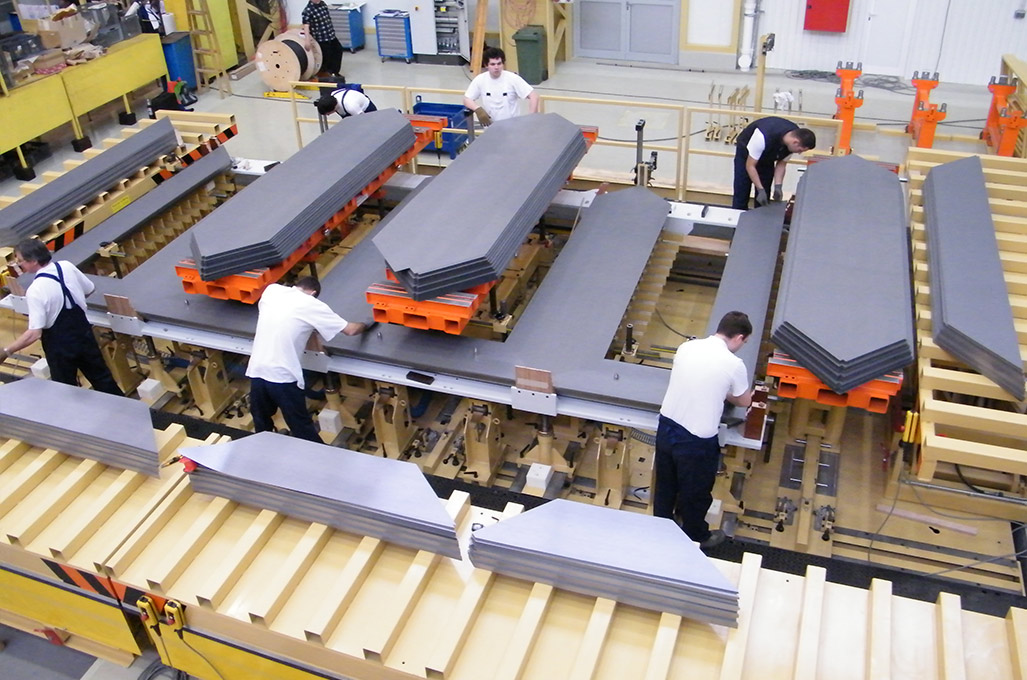
The Transformer Manufacturers Association of America made the practical consequence explicit in October 2025 comments to the Department of Commerce: Cleveland-Cliffs holds a de facto domestic monopoly, and extending Section 232 tariffs to GOES derivatives would not stimulate domestic substitution so much as restrict supply further. US imports of GOES transformer cores quadrupled from USD 126 million to USD 524 million between 2018 and 2025 as domestic production remained constrained by a single mill.
The one major new electrical-steel investment in the United States does not change this picture. ArcelorMittal is building a $1.2 billion mill at Calvert, Alabama, capable of up to 150,000 metric tons annually with first production expected in 2027. But the plant will make non-grain-oriented electrical steel, the grade used in motors and generators, not the grain-oriented steel that transformer cores require. The single-mill constraint on GOES, and the Japanese monopoly on domain-refined Hi-B, are untouched by it.
The GOES-to-transformer value chain has a single domestic bottleneck at every stage of steel processing
The Companies That Matter, and What They Are Building
The US LPT market is dominated by a small number of players, most of them foreign-owned. According to Newton-Evans Research’s mid-2024 assessment, four suppliers, Hitachi Energy, Hyundai, Siemens Energy, and Prolec-GE, together hold more than two-thirds of the very large power transformer (251-400 MVA) segment. In the extra-large (400+ MVA) range, three firms, Hitachi, Siemens, and Prolec-GE, command roughly 60% of US revenue. The pattern repeats across MVA tiers.
The investment response to the shortage is substantial but concentrated in the same set of foreign-headquartered companies. Hitachi Energy is building a $457 million large power transformer factory in South Boston, Virginia, part of a broader USD 1 billion-plus US investment announced in September 2025 that also includes USD 106 million for a transformer components plant in Alamo, Tennessee and USD 70 million for high-voltage component expansion in Mount Pleasant, Pennsylvania. The company’s order backlog has more than tripled since 2020. The South Boston facility is expected to be operational by 2028, creating roughly 825 jobs.
Hyosung HICO, which acquired the Memphis, Tennessee transformer plant from Mitsubishi Electric Power Products in a deal announced December 2019 and closed in Q1 2020 for approximately USD 45 million, holds a distinctive position: it is the only facility in the United States capable of designing and manufacturing 765 kV power transformers, the highest voltage class for bulk transmission. A USD 157 million third expansion phase announced in late 2025 targets production capacity above 250 units per year by 2028, up from approximately 130 currently. Cumulative investment in the Memphis plant now exceeds USD 300 million.
HD Hyundai Electric, with a US plant in Montgomery, Alabama, is investing USD 200 million to expand output from approximately 100 units per year to 150, as part of a broader USD 274 million investment package announced in January 2025. Siemens Energy is committing approximately USD 150 million to its Charlotte, North Carolina facility and announced a USD 1 billion broader US manufacturing plan in early 2026.
GE Vernova completed the acquisition of the remaining 50% stake of Prolec GE from Xignux on February 2, 2026, for approximately USD 5.254 billion in cash consideration as recorded in its SEC 10-Q filing (against an announced price of USD 5.275 billion, with the difference reflecting standard closing adjustments). The deal closed roughly four months ahead of the mid-2026 guidance given at announcement in October 2025. Prolec GE has approximately 10,000 employees across seven manufacturing sites in the Americas, including five in the United States. GE Vernova had separately announced plans to invest nearly USD 600 million over two years starting January 2025 to upgrade its existing grid equipment factories.
Prolec GE is also investing USD 140 million to construct a 144,000-square-foot facility in North Carolina in 2025. Pennsylvania Transformer Technology (PTT), one of the two sizeable independent US-owned manufacturers alongside Virginia Transformer Corporation, announced a USD 102.5 million expansion in Raeford, North Carolina in February 2025, adding 217 jobs across 300,000 square feet of new manufacturing space.
A Frontier Map analysis estimated roughly USD 1.8 billion in new LPT manufacturing capacity announced across the United States between 2023 and 2025, with most capital committed by Japanese, Korean, German, and Swiss companies. Virginia Transformer and Pennsylvania Transformer Technology, the two meaningfully sized US-owned independents, account for only a small share of total market revenue.
Technology: Solid-State Transformers Offer a Long-Term Option, Not a Near-Term Fix
The conventional large power transformer is a mature technology whose core inputs, grain-oriented electrical steel and copper or aluminum windings, each account for roughly a quarter of production cost, on a 2020 Commerce Department industry survey reported by the Department of Energy. Efforts to engineer around these constraints span two tracks: alternative materials and alternative device architectures.
On materials, the DOE’s December 2024 Flexible Innovative Transformer Technologies (FITT) program awarded approximately USD 20 million across nine projects, including one targeting high-efficiency electrical steels as a replacement for conventional GOES in large power transformers. A parallel initiative from DOE examined amorphous metal cores for distribution transformers, though global amorphous ribbon supply of roughly 400 million pounds per year falls short of US distribution transformer demand alone, estimated at 450 million pounds, making this a case of swapping one single-source input for another. The sole US amorphous ribbon producer is Metglas Inc. in Conway, South Carolina.
On device architecture, solid-state transformers use power-electronic semiconductor switching and a medium-frequency transformer core to convert voltage levels, offering potential advantages in size and controllability. However, solid-state technology remains confined to the distribution and medium-voltage segment (1-35 kV). High-voltage variants capable of replacing bulk-grid LPTs at 115-765 kV and above 100 MVA are still at the research stage. Eaton’s August 2025 acquisition of Resilient Power Systems, a Texas developer of medium-voltage solid-state technology deployed in EV charging depots, signals commercial intent from a major incumbent but at distribution voltages only. The DOE’s DIRECT project, confirmed November 2025, aims to demonstrate a cascaded multi-module solid-state transformer on a live grid circuit, the most advanced US step yet. ARPA-E is separately funding an HVDC solid-state transformer project at the University of Texas at Austin using a 30 kV/1 MW silicon carbide converter submodule, still in the research phase.
Solid-state technology will not resolve the near-term supply crisis. Tier-1 OEM slots for bulk-grid transformers from suppliers such as ABB and Siemens Energy are now targeting 2030-2031 delivery for orders placed in 2026, a horizon against which even promising prototype work cannot compete.
Economics: Price Power, Margin Expansion, and the Perversity of Rationing
The economics of the current shortage reward incumbents rather than customers. Large power transformer prices have risen approximately 77% since 2019, with CISA’s National Infrastructure Advisory Council documenting an 80% price rise since the start of the pandemic. Wood Mackenzie estimates LPT prices in 2025 at 50-70% above their 2019 baseline, with extra-high-voltage units at the upper end of that range. Average selling price per LPT unit reached approximately USD 1.99 million in 2025, up from USD 1.54 million in 2020, though this Ken Research figure carries relatively low confidence (0.65) and should be treated as indicative rather than definitive.
With a two-to-three-year manufacturing backlog across the global industry, producers face no downward pricing pressure. They are rationing capacity, not competing for orders. GE Vernova’s Electrification segment guided for EBITDA margins of 17-19% in 2026, and the company reported that equipment margin in its USD 150 billion backlog expanded six percentage points year-over-year in 2025, driven by favorable pricing and disciplined order intake. Generator step-up transformer demand has grown 274% since 2019, and substation power transformers 116%, concentrating the most acute rationing at the most complex and expensive end of the product curve.
The premium for immediately available refurbished LPTs in the 100-300 MVA class reportedly reached 40-60% above standard refurbishment pricing in 2025-2026, with some transactions exceeding the cost of new equipment. That figure comes from a single source at moderate confidence, but it is consistent with the broader dynamic: delivery speed is now priced above capital efficiency.
Two structural cost disadvantages compound the supply problem for US customers. Utilities require custom specifications for each LPT, preventing standardized production runs and the economies of scale that might bring prices down. Additionally, only approximately ten specialized railcars in the United States can transport the largest transformer units, adding logistics cost and delivery risk that further raise unit economics. Section 45X of the Inflation Reduction Act, the advanced manufacturing production credit, explicitly excludes transformers, meaning domestic LPT manufacturers receive no production tax credit subsidy comparable to what solar, wind, and battery manufacturers receive.
Regulation and Policy: Multiple Interventions, Limited Coordination
The federal government has recognized the transformer shortage in legally significant terms. On April 20, 2026, President Trump issued a Presidential Determination under Section 303 of the Defense Production Act, formally declaring that grid infrastructure supply chains, including transformers, electrical core steel, substations, and high-voltage circuit breakers, are essential to national defense. The determination found that US industry cannot reasonably be expected to provide these items in a timely manner due to limited domestic production capacity and foreign supply dependence. This followed a similar Biden-era DPA determination in June 2022 that covered transformers and grid components, though no documented evidence shows IRA DPA funds were subsequently allocated to transformers specifically.
Executive Order 14420, issued August 26, 2026, declared a national emergency covering the bulk-power system, expanded the scope of EO 13920 (2020, which had focused narrowly on Chinese-origin large power transformers) to include inverters, battery energy storage, and software, and mandated a federal procurement preference for US-made energy infrastructure. However, no specific product or vendor is barred until DOE publishes implementing rules, with a deadline approximately 120 days from the order’s issuance.
The tariff environment has added its own complications. On August 15, 2025, the Commerce Department announced that 50% Section 232 tariffs on steel and aluminum would extend to transformer derivative products, specifically electrical cores and laminations, effective August 18, 2025. A concurrent 50% tariff on copper took effect August 1, 2025. Industry coalitions led by NEMA and NAED opposed these extensions, and a second coalition warned in October 2025 that applying Section 232 tariffs to GOES derivatives would create a “single point of failure” risk given reliance on Cleveland-Cliffs and would disadvantage domestic transformer manufacturers relative to importers of finished units not subject to the same tariff.
The interconnection side of the problem has also attracted regulatory attention. DOE Secretary Chris Wright invoked Section 403 of the DOE Organization Act in October 2025 to direct FERC to initiate rulemaking on large-load interconnection (above 20 MW). FERC met its April 2026 deadline procedurally and in June 2026 issued Show Cause Orders to all six ISOs and RTOs to justify or reform their interconnection tariffs for data centers and large loads within 60 days.
Outlook: The 2030s as the Earliest Window for Relief
The central constraint on US data-center and grid expansion through the end of this decade is physical: the time required to manufacture, test, transport, and install large power transformers. An October 2025 update from Wood Mackenzie put the power transformer supply deficit at 40%, with the shortfall projected to fall to approximately 5% by 2030. A separate Wood Mackenzie projection series has the generator step-up shortfall dropping from roughly 47% to around 14% over the same period; press statements from the firm in 2025 put the current GSU gap near 100%. Pad-mount three-phase transformer shortages are projected to worsen through the period as industrial, data-center, and EV demand compounds. Even by 2030, Wood Mackenzie’s Ben Boucher states that supply constraints will “persist well into the 2030s.”
The demand trajectory makes these supply projections more alarming. Wood Mackenzie estimates data centers will account for roughly 68% of US load growth through 2030, with US data center capacity projected to scale from roughly 24 GW to 100 GW between 2026 and 2030. PJM Interconnection, the largest US grid operator, attributes 30 GW of its 32 GW forecast load growth from 2024 to 2030 to data centers. A 50 MW AI campus requires 4-6 LPTs. At current lead times, a hyperscale operator that does not have transformer slots already reserved cannot realistically plan for delivery before 2028 at the earliest.
Lead times have tripled since 2021 and policy responses have not yet reversed the supply deficit trajectory
The GOES problem compounds all of this. Even if transformer manufacturers could ramp production, they would be constrained by the availability of the right grade of electrical steel. Expanding Cleveland-Cliffs’ Butler Works would increase domestic supply of HP/CGO grades, but the highest-efficiency grade required for energy-efficient large power transformers, domain-refined Hi-B, would remain an exclusively imported Japanese product. The Breakthrough Journal’s August 2026 analysis argues that policy support directed at Butler Works expansion alone risks funding production of a grade the market for premium LPTs does not want.
The announced investment wave is real and substantial. Between Hitachi Energy, GE Vernova, Siemens Energy, HD Hyundai Electric, Hyosung HICO, and the US-owned independents, more than USD 1.8 billion in new North American manufacturing capacity has been committed since 2023. The South Boston, Virginia facility, Montgomery, Alabama expansion, Charlotte upgrades, and Raeford, North Carolina expansions will materially increase domestic output when they come online between 2027 and 2029. But manufacturing plants take years to build, qualify, and staff, GOES supply constraints set a ceiling on how fast any of them can ramp, and the demand surge is happening now. The transformer shortage is a binding physical constraint, and the pace at which it eases will determine, more than any software or silicon advance, how quickly the AI buildout is actually wired up.
New research by email. Roughly one piece a month.
Sources (82)
- VERIFIEDMARKETRESEARCH
US Large Power Transformer Market Size, Share, And Forecast – Verified Market Researchverifiedmarketresearch.com
- KENRESEARCH
US Large Power Transformer Market | 2019–2030 | Ken Researchkenresearch.com
- MORDORINTELLIGENCE
US Power Transformer Market Size & Growth Drivers 2030 – Mordor Intelligencemordorintelligence.com
- MARKETSANDMARKETS
US Power Transformer Market Size, Share, Trends, Growth Analysis Report, 2030 – MarketsandMarketsmarketsandmarkets.com
- ENERGY
Large Power Transformer Resilience Report to Congress – US DOE, July 2024energy.gov
- NLR
Large Power Transformer Supply Chain Gap Analysis – National Laboratory of the Rockies (NLR/DOE)docs.nlr.gov
- BREAKTHROUGHJOURNAL
America Makes The Wrong Steel For Its Transformer Supply Chain – Breakthrough Journalbreakthroughjournal.org
- MORDORINTELLIGENCE
US Large Power Transformer Market Growth Report 2031 – Mordor Intelligencemordorintelligence.com
- NEWTON-EVANS
A Mid-2024 Assessment of the U.S. Power Transformer Industry – Newton-Evans Research Companynewton-evans.com
- RESEARCHANDMARKETS
Large Power Transformer Market Size & Forecast to 2030 – Research and Marketsresearchandmarkets.com
- GRANDVIEWRESEARCH
US Power Transformer Market Size & Outlook, 2026–2033 – Grand View Researchgrandviewresearch.com
- REGULATIONS
Section 232 Transformer Tariff Comment to BIS – Regulations.gov, June 2025downloads.regulations.gov
- CLEVELANDCLIFFS
Butler Works :: Cleveland-Cliffs Inc. (CLF)clevelandcliffs.com
- BUTLEREAGLE
Kelly, Cleveland-Cliffs officials unpack proposed energy mandate – Butler Eaglebutlereagle.com
- MANUFACTURINGDIVE
Hitachi unveils $1B grid manufacturing investment, including Virginia transformer factory | Manufacturing Divemanufacturingdive.com
- UTILITYDIVE
Hitachi unveils $1B grid manufacturing investment, including Virginia transformer factory | Utility Diveutilitydive.com
- TRANSFORMERS-MAGAZINE
Hyosung HICO announces second major expansion | Transformer Magazinetransformers-magazine.com
- MARKETSCREENER
Hyosung Heavy Industries announces major expansion of Memphis power transformer plantsa.marketscreener.com
- KEDGLOBAL
Hyosung to double transformer output to conquer US market - KED Globalkedglobal.com
- SEC
- NEWTON-EVANS
GE-PROLEC + SPX Transformer Solutions (Waukesha) – A Rising Global Powerhouse for Power Transformers - Newton-Evans Research Companynewton-evans.com
- GMTODAY
Prolec GE acquires SPX Transformer Solutions for $645Mgmtoday.com
- YAHOO
U.S. Transformers Industry Research Report 2025-2030 | GE Vernova, Eaton, and Siemens Energy Lead the Moderately Consolidated $1.49 Bn Marketfinance.yahoo.com
- INDUSTRIALINFO
Siemens, GE Vernova Increase US Investment to Meet Gas Turbine Power Demand | Industrial Infoindustrialinfo.com
- VATRANSFORMER
Virginia Transformer Corpvatransformer.com
- SUBSTACK
The US imports 82% of its large power transformers. How it got there, and what it will take to rebuild the capability.frontiermap.substack.com
- NC
Governor Stein Announces $102 Million Expansion for Domestic Transformer Manufacturer in Raeford | NC Commercecommerce.nc.gov
- AREADEVELOPMENT
Pennsylvania Transformer Technology Expands Raeford, North Carolina, Manufacturing Operations - Area Developmentareadevelopment.com
- GEVERNOVA
GE Vernova completes Prolec GE acquisition – GE Vernova official press releasegevernova.com
- SEC
- SEC
- PRNEWSWIRE
Hyosung Chairman Cho Hyun-Joon Announces Major Expansion of Memphis Power Transformer Plant – PR Newswireprnewswire.com
- POWER-ENG
Hyosung acquiring Memphis transformer plant from Mitsubishi Electric Power – Power Engineeringpower-eng.com
- TN
Hyosung HICO Expands U.S. Manufacturing Headquarters – Tennessee ECDtn.gov
- ENERGY
- ENERGY
Innovation for the Transformer Supply Chain — ARPA-E/DOE presentation, Jan 2026arpa-e.energy.gov
- INL
Solid State Transformers - GridTechPedia (Idaho National Laboratory)gridtechpedia.inl.gov
- MARKETSANDMARKETS
Solid-state Transformer Market 2025–2035 | MarketsandMarketsmarketsandmarkets.com
- COHERENTMARKETINSIGHTS
Solid State Transformers Market Share & Analysis 2026–2033 | Coherent Market Insightscoherentmarketinsights.com
- ENERGY
MTMP-HVDCSST | ARPA-Earpa-e.energy.gov
- INDEPENDENT
The DOE Transformer Steel Rule and its Consequences — Independent Instituteindependent.org
- POWERMAG
DOE Eases Requirements in Final Transformer Efficiency Standards Amid Supply Chain Strain | POWER Magazinepowermag.com
- CISA
- KENRESEARCH
United States Large Power Transformer Market 2019–2030 – Ken Researchkenresearch.com
- SEC
- GEVERNOVA
GE Vernova Full Year 2025 Financial Results Press Releasegevernova.com
- POWERMAG
Transformers in 2026: Shortage, Scramble, or Self-Inflicted Crisis? – POWER Magazinepowermag.com
- MGRID
Trump Grid Equipment Order: What EO 14420 Actually Bansmgrid.org
- UTILITYDIVE
Trump declares emergency, moves to block some foreign-made equipment from grid | Utility Diveutilitydive.com
- WHITEHOUSE
Presidential Determination Pursuant to Section 303 of the Defense Production Act – The White Housewhitehouse.gov
- CONGRESS
Electricity Distribution Transformers: Supply, Tariffs, and Policy Options | Congress.govcongress.gov
- TEDMAG
Trump Administration Increases Tariffs on Certain Transformers – tEDmagtedmag.com
- FEDERALREGISTER
Federal Register :: Energy Conservation Program: Energy Conservation Standards for Distribution Transformers (2026 RFI)federalregister.gov
- UTILITYDIVE
DOE mulls changes to Biden-era transformer rule, raising utility concerns | Utility Diveutilitydive.com
- FEDERALREGISTER
Federal Register :: Energy Conservation Program: Energy Conservation Standards for Distribution Transformers (2024 Final Rule)federalregister.gov
- FERC
FERC to Act on Large Load Interconnection Docket by June 2026 | Federal Energy Regulatory Commissionferc.gov
- WHITECASE
- FEDERALREGISTER
Federal Register :: Publication of a Report on the Effect of Imports of Transformers and Transformer Components on the National Securityfederalregister.gov
- REGULATIONS
Inclusions Request For Electrical Steel Derivative Productsdownloads.regulations.gov
- REGULATIONS
October 2025 Industry Coalition Comment to Secretary of Commerce – Regulations.govdownloads.regulations.gov
- USITC
Large Power Transformers from South Korea — USITC Publication 5531usitc.gov
- ENERGY
- WOODMAC
- PUBLICPOWER
American Public Power Association – Wood Mackenzie Transformer Deficit Reportpublicpower.org
- WOODMAC
Tariffs and supply chain dislocation hamper US power projects | Wood Mackenziewoodmac.com
- EEPOWER
Transformer Supply Chain Woes Persist as Energy Demand Grows – EE Power Tech Insightseepower.com
- WOODMAC
Mind the gap: tackling supply-chain challenges in the electric T&D sector | Wood Mackenziewoodmac.com
- DATACENTERKNOWLEDGE
AI Data Center Boom Rewires US Power Supply Chain – Data Center Knowledgedatacenterknowledge.com
- PV-MAGAZINE-USA
U.S. transformer market faces severe supply constraints as lead times extend to four years – pv magazine USApv-magazine-usa.com
- PJM
PJM Proposes Framework To Connect Data Centers Without Compromising Reliability | PJM Inside Linesinsidelines.pjm.com
- CANARYMEDIA
PJM's big new data center plan: Make the states figure it out – Canary Mediacanarymedia.com
- UTILITYDIVE
PJM trims near-term load forecast on stricter data center vetting | Utility Diveutilitydive.com
- ARXIV
To Defer or To Shift? The Role of AI Data Center Flexibility on Grid Interconnectionarxiv.org
- ARXIV
Grid Integration of Gigawatt-Scale AI Data Centers under Connect-and-Managearxiv.org
- ENR
Hitachi Breaks Ground on $457M Va. Large Power Transformer Plant Expansion | Engineering News-Recordenr.com
- ALABAMA
Governor Ivey Announces that ArcelorMittal Plans $1.2 Billion Alabama Mill to Produce Electrical Steelgovernor.alabama.gov
- ARCELORMITTAL
ArcelorMittal to move forward with construction of a new, world-class electrical steel facility in Alabamaautomotive.arcelormittal.com
- CISA
- TERRAPINCG
Switchgear, Transformer, and Generator Lead Times in 2026 | Terrapin Cost Groupterrapincg.com
- GRIDREADINESS
HV Transformer Lead Times 2026: EU vs US | GridReadinessgridreadiness.com
- ENR
- BURR