Executive summary
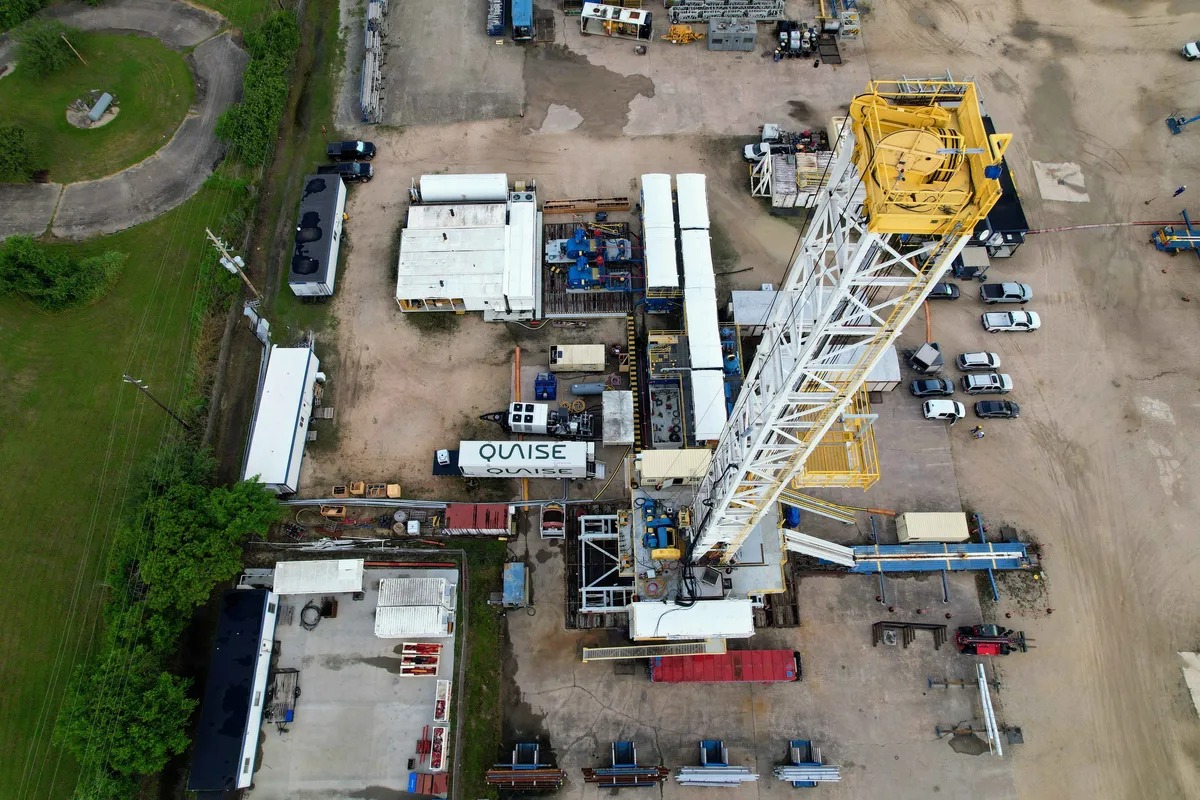
On December 15, 2025, Quaise Energy published a year-end review containing a statement that is the company’s most specific forward commitment: “Our field team is now preparing to hit one kilometer in 2026.” The claim is specific, dated, and testable. It sits against a confirmed field record of 118 meters at a granite quarry in Marble Falls, Texas, achieved in July 2025 using a 100-kilowatt gyrotron. Reaching one kilometer means a waveguide eight times longer, rock vapor lifted out of a gas column eight times taller, and a hole that will almost certainly cross water-bearing rock. Which gyrotron did the drilling after 2025 is not public. The July 2026 Series B announcement states the system is “approaching one kilometer of depth” at the same Texas site, which is a company claim about an in-progress hole, not a completed depth confirmed by an independent body. This article examines what the engineering record shows, where it goes silent, and what the binding constraint is.
Quaise said one kilometer in 2026; the record shows 118 meters, a company statement of "approaching" it, and a gyrotron on order
Claimed
- February 8, 2022Series A: field-deployable drilling machines "in the field by 2024" promised by end of 2024
- May 20251-megawatt gyrotron expected "next month" (New Atlas, Houston demonstration) promised by June 2025
- July 22, 2025Larger drill: tests "set to begin" in 2026 (MIT Technology Review) promised by end of 2026
- December 15, 2025The claim: "Our field team is now preparing to hit one kilometer in 2026" promised by end of 2026
- July 7, 2026"approaching 1 kilometer" (Series B first close)
Scheduled
- August 17, 2026Kyoto Fusioneering drilling gyrotron ordered; no power rating or delivery date
- 2030Project Obsidian 50 MW first power
Delivered
- July 2025100 m in Central Texas granite (118 self-reported); waveguide ran out
- July 2026Obsidian confirmation well drilling conventionally, 15,000 ft (4,570 m) target
Tells ahead
- December 2026A completed depth of 1,000 meters or more, announced
- Q1 2027Drilling gyrotron delivered and commissioned, with its power rating
- Q2 2027Beam-on hours, uptime, water handling or waveguide loss published
- 2030Project Obsidian's first-power date holds in Oregon filings
From centimeters to meters: what the field record shows
Quaise was formally spun out of MIT in 2018, building on research by Paul Woskov, a research engineer at MIT’s Plasma Science and Fusion Center who first proposed using high-power millimeter waves for deep drilling in 2008. The concept had been proven only in laboratory conditions before 2025, with MIT’s early apparatus drilling a hole a few centimeters deep.
The first meaningful field result came on July 22, 2025, when Quaise announced a world record for millimeter-wave drilling at 100 meters in a granite quarry in Central Texas. The company subsequently self-reported the final depth as approximately 118 meters, and the reason drilling stopped matters: the hole did not fail. Quaise ran out of the custom waveguide sections needed to extend further. That separates a physics failure from a logistics one, and the physics, at that depth, appears to have held.
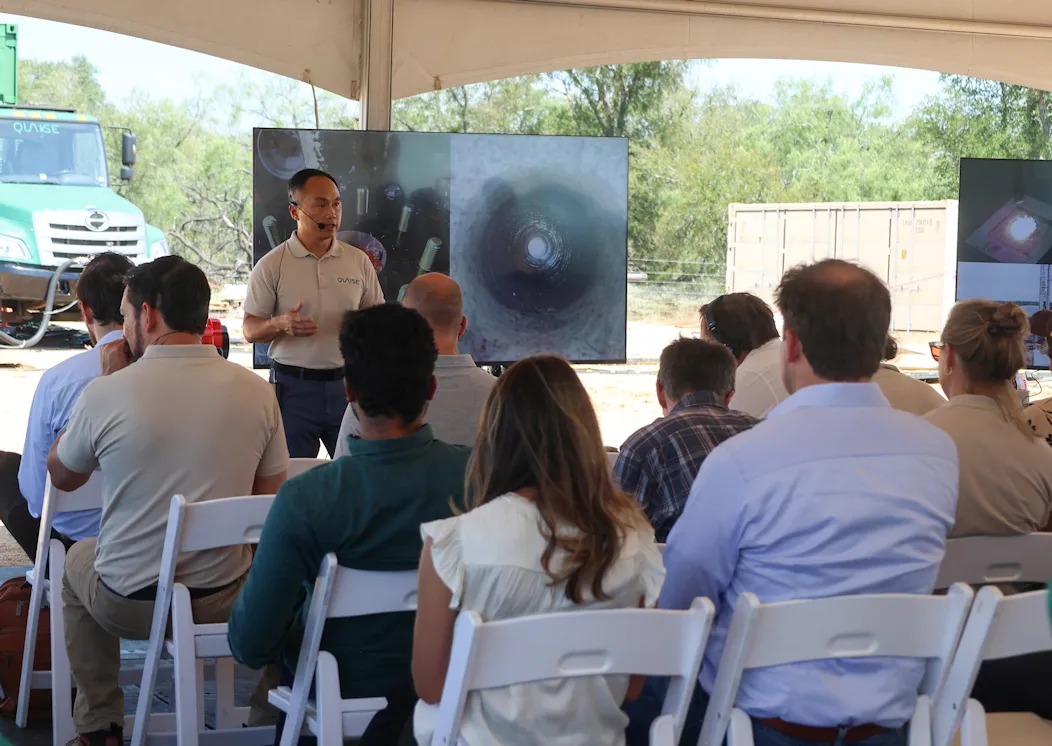
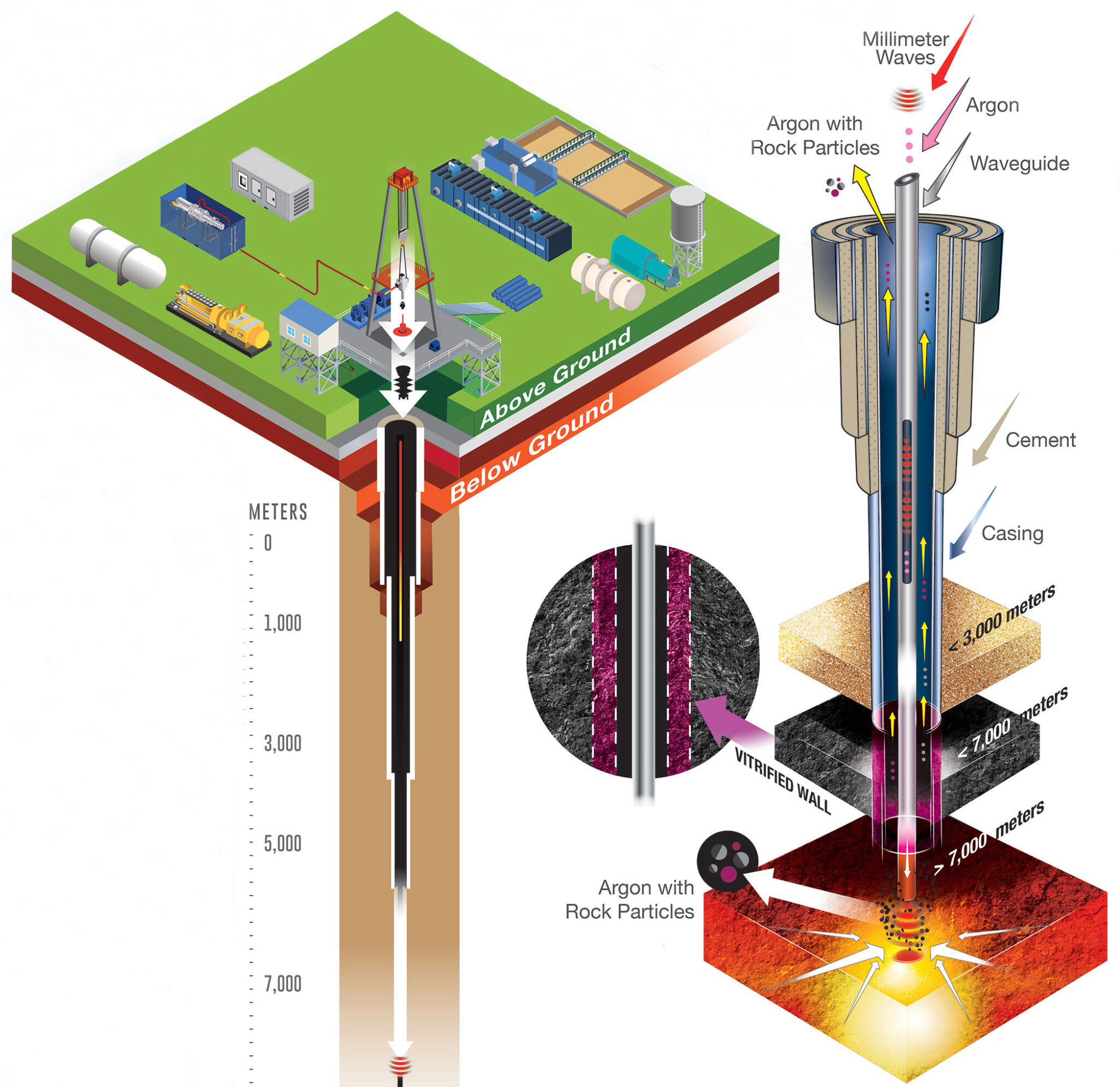
The 100-kilowatt gyrotron operates in pulsed mode. The beam fires for roughly a minute, heats rock until it cracks, melts, or vaporizes, and a bit at the end of the waveguide scrapes off fractured material while a purge gas carries debris to the surface. In early 2025, Quaise’s VP of Engineering, Henry Phan, described the 100-kilowatt system as making a 4-inch hole at “about one meter an hour” (Real Engineering, filmed at Quaise’s Houston facility). By September, Quaise reported “drilling at speeds 10x faster than previous demonstrations”; the fastest rate any source has put a number to is Interesting Engineering’s peak of 5 meters per hour at Marble Falls. No public source has disclosed the total field hours logged, how many hours of gyrotron-on time accumulated to reach 118 meters, or what fraction of elapsed calendar time was productive versus maintenance. The commercial case rests on sustained uptime approaching continuous operation, and the Texas campaign provides no public basis for estimating it.
What a kilometer asks for: power, pipe, purge, and water
Quaise’s next stage uses a 1-megawatt gyrotron, ten times the power of the record-setting unit, to drill an 8.5-inch hole at the same one meter per hour, about one megawatt-hour per meter of hole. Whether that machine or the 100-kilowatt unit drilled the hole Quaise described in July 2026 as approaching one kilometer is not public. Running either one in the field takes a containerized system built around it, including a custom 50-kilovolt DC power supply built in Switzerland. Total power draw for the 1-megawatt system, including cooling and air-compressor support equipment, exceeds 3 megawatts. Phan’s own arithmetic for the step: doubling the diameter is four times the area against ten times the power, “so we think we have enough margin there.”
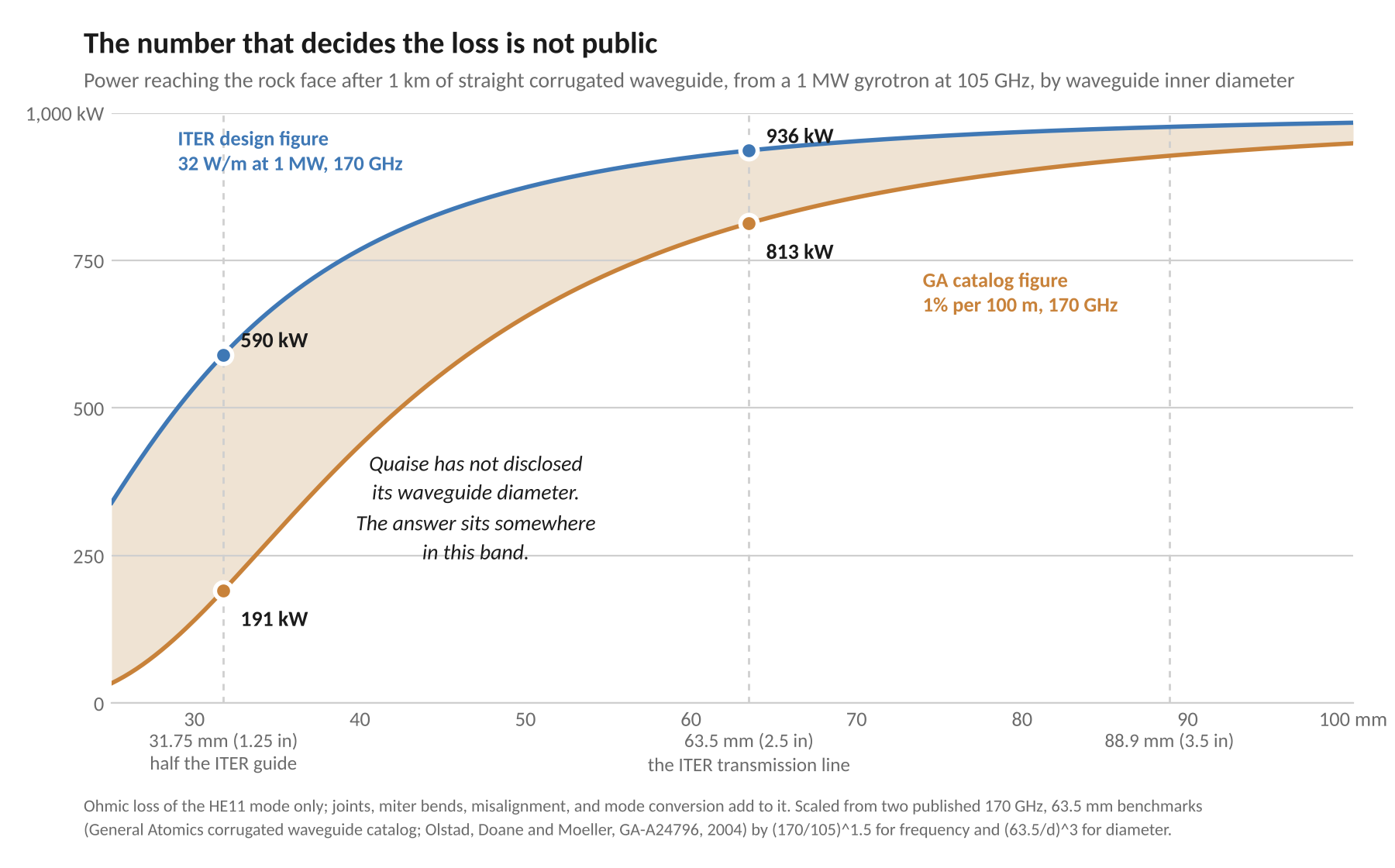
Transmitting a megawatt of millimeter-wave power down a kilometer of corrugated waveguide is, in principle, achievable. General Atomics rates its corrugated waveguide at “as low as 1% per 100 meters” and “up to 1 MW in air,” and its 2004 design work for ITER’s transmission lines puts the ohmic loss of the HE11 mode in the 63.5-millimeter guide at 170 GHz at “about 32 watts per meter when 1 MW is transmitted.” Over a straight kilometer with no miter bends those figures give a loss between about 3 and 10 percent, leaving 900 to 970 kilowatts at the far end. Quaise’s beam is at 105 GHz, where the same guide loses about twice as much, roughly 6 to 19 percent, leaving 810 to 940 kilowatts. The loss also rises with the inverse cube of the diameter: a guide half as wide at that frequency loses 40 percent or more over the kilometer. Quaise has not disclosed its waveguide diameter, so the loss over its kilometer sits somewhere between a few percent and a large fraction of the beam, and the number that decides it is not public.
The waveguide window separating the gyrotron from borehole gases must withstand high pressure and temperature while remaining electromagnetically transparent, and the company identifies accidental plasma formation as a specific operational hazard: if the millimeter-wave beam ionizes gas in the borehole into plasma, energy is wasted and the waveguide can be damaged. Neither challenge is insurmountable at 118 meters. Whether they are manageable at 1,000 meters under the gas pressure and temperature at that depth has not been reported.
Rock-vapor and debris removal is the third demand. Quaise’s system uses a gas purge, with nitrogen in the early tests, and argon observed at the Marble Falls site in September 2025. Coverage in EEPower and IEEE Spectrum identifies debris extraction as a key unsolved challenge at depth. No public source discloses the gas flow rate, the pressure differential required, or the extent to which a 1-kilometer gas column changes the debris-removal energy budget compared with 118 meters. The vitrified glass lining that forms on borehole walls reduces collapse risk but does not address debris transport.
Water is the fourth demand. A kilometer of granite almost certainly crosses water-bearing fractures, and any water entering the hole absorbs beam energy as it boils. Real Engineering’s 2025 documentary called water “this technology’s worst enemy,” and the only remedy proposed so far, melting material into the hole to seal fractures, has not been shown in any public test. Nothing in the public record shows how the system performs once water reaches it.
The binding constraint
The binding constraint on the 1-kilometer claim is sustained operation at depth: keeping the beam on, the waveguide intact, the purge gas lifting rock vapor out of a hole eight times deeper than any reported before, and water out of the hole, for the hundreds to thousands of hours of drilling a kilometer needs.
Which gyrotron does that work is unclear in the public record. New Atlas, at the May 2025 Houston demonstration, reported that Quaise expected its 1-megawatt gyrotron “next month.” MIT Technology Review reported in July 2025 that drilling tests with the larger machine were “set to begin” in 2026. In September 2026, Kyoto Fusioneering announced an order from Quaise, signed August 17, for a gyrotron designed to run continuously while a hole is advanced, with no power rating and no delivery date disclosed. None of these says which machine drilled the hole Quaise described in July as approaching one kilometer.
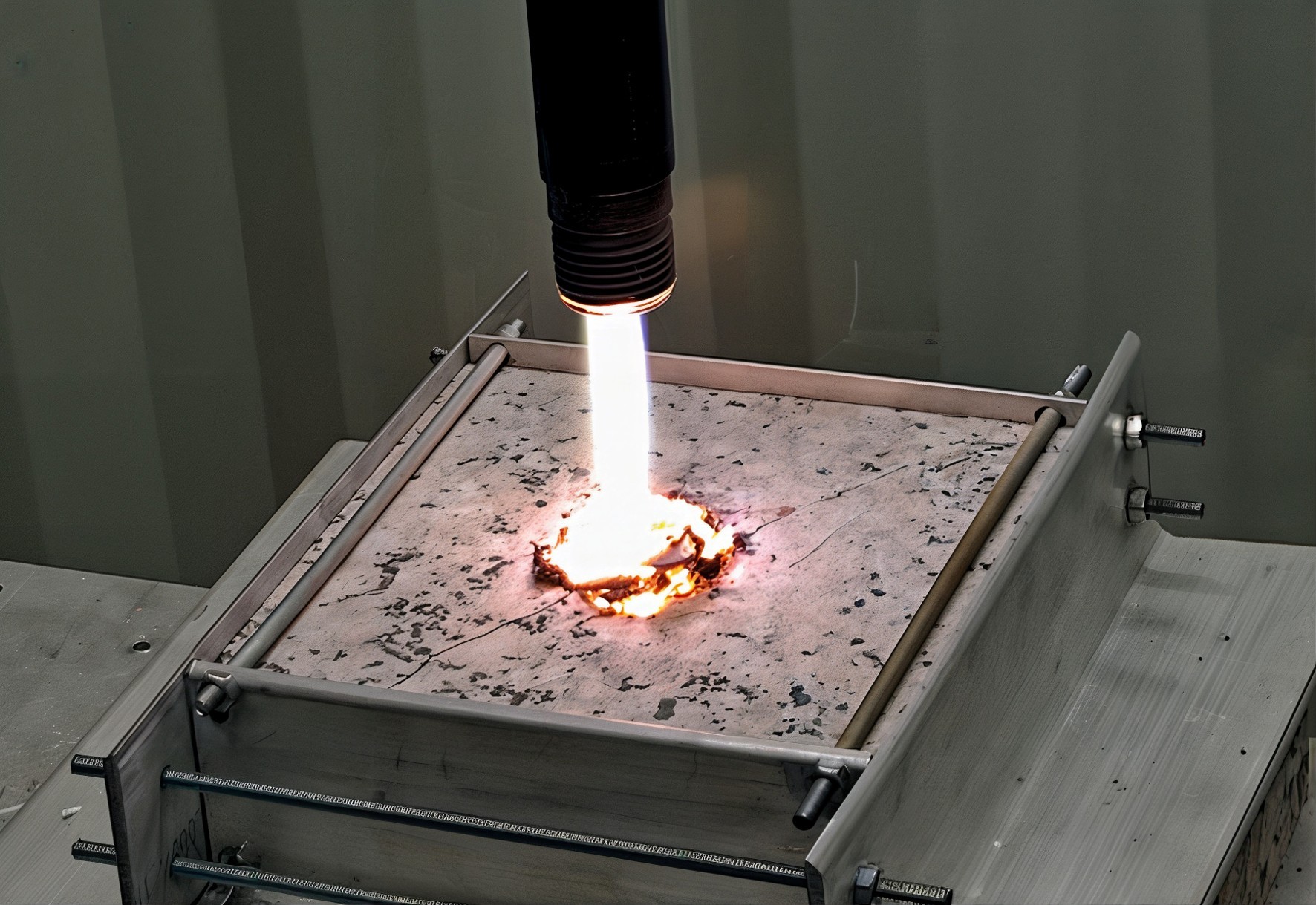
The pace in the record can reach the claim, with little margin at the slow end. At the one meter per hour Quaise’s VP of Engineering described in early 2025, a kilometer is about 1,000 hours of drilling, roughly six weeks around the clock. At the 3 to 5 meters per hour Quaise has set as its goal for steady operation, with a peak of 5 reported at Marble Falls, it is 200 to 333 hours of drilling. Between July 2025 and December 2026 there is time for either, if uptime is good. The 118-meter campaign stopped because the waveguide ran out, not because the physics failed.
What the record lacks is the evidence that would confirm it: a completed depth, and the duty cycle behind it. Gyrotrons built for fusion heating are rated for pulses of seconds to an hour, not for weeks of running, so sustained beam time is where a field campaign is most likely to stall, and water is where a deep one is most likely to slow.
What would have to change for this constraint to stop binding: a published, completed depth of 1,000 meters or more, with the beam-on hours and uptime behind it.
The capital structure: $280 million raised, pre-revenue
Quaise puts its total funding at $280 million as of the August 27, 2026 Series B final close. The disclosed rounds sum to $271 million, and the company has not itemized the difference. The path there began with a $6 million seed round in June 2020, led by The Engine, then a $12 million pre-Series A from Nabors Industries in August 2021. The Series A closed at $40 million in February 2022, led by Safar Partners, and expanded to $52 million in June 2022 with a $12 million tranche led by TechEnergy Ventures. A $21 million Series A1 followed in March 2024, led by Prelude Ventures and Safar Partners, with Mitsubishi Corporation and Standard Investments among new investors.
Quaise Energy: Cumulative Capital Raised
The Series B itself came in two tranches: a $134 million first close on July 7, 2026, led by Prelude Ventures with strategic investments from JERA and Idemitsu Kosan, and a $46 million second close anchored by Nabors Industries’ $35 million on August 27, 2026. BofA Securities and Goldman Sachs advised on the fundraise. The round grew out of a $200 million program for Project Obsidian reported in February 2026, planned as $100 million of Series B equity plus about $100 million from grants, debt and project-level finance; the Series B came in at $180 million. CEO Carlos Araque described the round as taking Quaise “from field-proven technology to first commercial revenues.”
In September 2026, the U.S. Department of Energy selected Quaise for up to $25 million in federal funding to support Project Obsidian, as part of a $99 million DOE geothermal initiative. No revenue or profitability figures have been disclosed. The company describes itself as pre-revenue and advancing toward first commercial revenues. No burn rate or runway figure is public.
Fervo Energy, which drills at conventional depths with proven methods, raised $1.89 billion in its 2026 IPO, against the $280 million Quaise reports in total. The difference is a measure of how much further along conventional geothermal is, not a direct comparison.
Team
Carlos Araque, MIT-trained and a 15-year Schlumberger veteran, co-founded the company in 2018 with Matt Houde, who holds a geological engineering degree and previously worked at AltaRock Energy. Paul Woskov, originator of the gyrotron drilling concept, remains at MIT as a foundational advisor rather than joining the company.
Key hires signal a deliberate shift from laboratory to field and commercial operations: Dr. Geoffrey Garrison joined as VP of Operations in February 2024, bringing 30 years of geoscience experience including a VP role at AltaRock Energy, and Kathryn Hite, the chief operating officer, spent 17 years at SLB, formerly Schlumberger, rising to director.
Market position and Project Obsidian
Quaise’s commercial argument rests on geography-agnosticism. The company states superhot conditions exist everywhere on the planet at depths of 10 to 20 kilometers, enabling deployment near any population or industrial center rather than at volcanic or tectonic hotspots. Quaise’s commercial target is to drill to 20 kilometers to reach rock at approximately 500°C, where water is supercritical and, the company says, carries roughly ten times more energy per unit volume than subcritical geothermal. That depth would exceed the 12.2-kilometer Kola Superdeep Borehole, the deepest hole ever drilled by any method.
The immediate commercial vehicle is Project Obsidian, on U.S. Forest Service land south of Newberry Volcano in central Oregon, which broke ground in 2025. Quaise says it began drilling the first confirmation well in July 2026, to about 15,000 feet and by conventional means, without millimeter-wave energy. Nabors says one of its PACE-B rigs is doing the drilling, and the Bend Bulletin reported the well more than 30 days underway on September 22. Phase I targets 50 megawatts of electricity by 2030. Quaise has signed a power-purchase agreement for that initial 50 megawatts with an undisclosed customer and is pursuing agreements for an additional 200 megawatts of future capacity.
Claim drift: what was promised when
The 1-kilometer claim is not the first Quaise commitment to have encountered schedule pressure. In February 2022, the Series A announcement stated the company would “build field-deployable drilling machines to demonstrate the capabilities of this novel drilling technology in the field by 2024.” Field drilling at meaningful depth did not happen until July 2025, when the Texas campaign reached 100 meters. The same 2022 framing stated first energy harvesting from a pilot well by 2026; no pilot well has yet produced energy. The 2028 goal of repowering a fossil-fuel plant has also given way to Project Obsidian, a new plant whose first power is now set for 2030.
These shifts are not unusual for a company developing hardware at the frontier of what has been attempted, and in each case the underlying physics has advanced. But they are a relevant input to assessing the 2026 kilometer claim. A company whose field milestones have arrived a year late or been replaced by later ones, claiming an eightfold depth increase in a single year, with no published depth since 118 meters, warrants a specific assessment of what would confirm or refute the claim before the year ends.
Quaise targets the deepest, least-mature quadrant: higher potential output per well, higher technology risk
What would change this assessment
Several developments would increase confidence that the 1-kilometer claim holds. Delivery and commissioning of the drilling gyrotron Kyoto Fusioneering is building, with its power rating disclosed, followed by a disclosed drilling campaign with reported metrics on duty cycle, water handling, and debris-extraction performance, would show how the depth was reached. A third-party log or independent measurement of borehole depth at or beyond 1,000 meters at the Marble Falls site, rather than a company statement about an in-progress hole, would move the claim from asserted to demonstrated. An engineering paper or patent disclosing waveguide loss, gas-purge performance, and water handling at depths beyond 118 meters would close the three technical gaps the record leaves open. DOE’s September 2026 award covers Project Obsidian in Oregon, not the Texas test site, so DOE reporting will speak to Obsidian’s wells rather than the kilometer claim.
Several developments would reduce confidence. No confirmed depth by December 31, or a 2027 announcement that restates the kilometer as a future goal, would mean the 2026 claim was not met. Any report of water ingress slowing the Texas hole would explain why. Any public disclosure of waveguide integrity problems at depth, plasma formation events, or debris-extraction stoppages at depths between 118 meters and 1,000 meters would indicate the physics challenges are harder than the 118-meter campaign suggested. A shift in Project Obsidian’s 2030 first-power target would suggest the broader commercial schedule is softer than presented, though since Obsidian is drilled conventionally, a slip there would speak to project execution rather than to millimeter-wave drilling.
Observables
The first tell is the claim’s own date. By December 31, 2026, Quaise announces a completed depth of 1,000 meters or more at its Texas field site. An announcement settles the claim as met; none, or a restatement of the kilometer as a 2027 goal, settles it as missed.
The second is which gyrotron did the work. A Quaise or Kyoto Fusioneering announcement of delivery and commissioning of the drilling gyrotron, with its power rating, would show whether the kilometer campaign ran on the new machine or the 100-kilowatt unit. The check date is March 31, 2027.
The third is published operating data. A technical paper, conference talk, or patent disclosing beam-on hours, uptime, water handling, or waveguide loss beyond 118 meters would turn a depth claim into an engineering record. The check date is June 30, 2027. Quaise already patents field systems, including US Patent 12,584,861 on borehole emissions monitoring.
The fourth is Project Obsidian’s 2030 first-power date. Any shift would show in Oregon regulatory or interconnection filings before it shows in a press release.
For a look at the system in Quaise’s Houston lab, Real Engineering’s 2025 documentary, filmed at the facility, is the best visual record available.
Sources (39)
Disclosure: the author is an engineer at a DOE national laboratory and has no involvement with the geothermal program or Quaise's September 2026 award; this piece draws only on the public record.
- BUSINESSWIRE
Quaise Energy Achieves Drilling Milestone with Millimeter Wave Technology (Business Wire)businesswire.com
- TECHNOLOGYREVIEW
This startup wants to use beams of energy to drill geothermal wells (MIT Technology Review)technologyreview.com
- NEWATLAS
Masers are the future of clean energy (New Atlas)newatlas.com
- QUAISE
- QUAISE
- MIT
MITEI spinout Quaise raises $180 million (MIT Energy Initiative)energy.mit.edu
- KYOTOFUSIONEERING
Kyoto Fusioneering to Supply Gyrotron System to Quaise Energy (Kyoto Fusioneering)kyotofusioneering.com
- QUAISE
Quaise Energy Raises $21 Million to Accelerate Terawatt-Scale Geothermal Energy (Quaise.com)quaise.com
- BUSINESSWIRE
- TECHENERGYVENTURES
TechEnergy Ventures joins Quaise Energy (TechEnergy Ventures)techenergyventures.com
- THINKGEOENERGY
Quaise Energy secures additional $12m from Series A funding (ThinkGeoEnergy)thinkgeoenergy.com
- BUSINESSWIRE
Quaise Raises $12 Million from Nabors Industries (Business Wire)businesswire.com
- BUSINESSWIRE
Quaise Launches with $6 Million to Unlock Earth's Most Abundant Clean Energy Source (Business Wire)businesswire.com
- BUSINESSWIRE
Quaise Energy Secures $40M Series A to Unlock Terawatt-Scale Geothermal Energy (Business Wire)businesswire.com
- USPTO
US Patent 12,584,861: Continuous emissions monitor for directed-energy borehole drilling (USPTO)image-ppubs.uspto.gov
- GA
- OSTI
Circular Corrugated Miter Bend and Gap Losses for Fusion Applications (OSTI)osti.gov
- RESEARCHGATE
Design of Circular Corrugated Waveguides to Transmit Millimeter Waves at ITER (ResearchGate)researchgate.net
- NEWATLAS
Drilling the deepest hole in history: Unlocking geothermal energy (New Atlas)newatlas.com
- NEWATLAS
Quaise energy demos millimeter wave drilling for deep geothermal (New Atlas)newatlas.com
- CANARYMEDIA
Quaise looks to advance 'superhot' geothermal power plant in Oregon (Canary Media)canarymedia.com
- CANARYMEDIA
Quaise Energy raises $134M to fuel superhot geothermal ambitions (Canary Media)canarymedia.com
- EEPOWER
Gyrotron Technology Goes Deep For Geothermal Energy (EEPower)eepower.com
- IEEE
Fusion Tech Finds Geothermal Energy Application (IEEE Spectrum, March 29, 2024)spectrum.ieee.org
- QUAISE
Company page (Quaise.com)quaise.com
- MIT
MITEI spinout Quaise Energy successfully demonstrates geothermal drilling technology in the field (MIT Energy Initiative)energy.mit.edu
- QUAISE
Quaise Energy Appoints Dr. Geoffrey Garrison and Dr. Trenton Cladouhosquaise.com
- QUAISE
Meet Matt Houde (Quaise.com)quaise.com
- ESGDIVE
Bill Gates-backed geothermal developer Fervo raises $1.89B in IPO (ESG Dive)esgdive.com
- BENDBULLETIN
Company to drill deep beneath Newberry Caldera in search of geothermal energy (The Bend Bulletin, September 22, 2026)bendbulletin.com
- MIT
Tapping into the million-year energy source below our feet (MIT News)news.mit.edu
- ENERGYCAPITALHTX
Quaise Energy seeks $200M for superhot geothermal plant (Energy Capital)energycapitalhtx.com
- INTERESTINGENGINEERING
US firm drills record 387 feet into granite with millimeter wave system (Interesting Engineering)interestingengineering.com
- INTERESTINGENGINEERING
Fusion-built gyrotron to blast rock for deep geothermal energy (Interesting Engineering)interestingengineering.com
- QUAISE
Looking Back on 2025 (Quaise.com, December 15, 2025)quaise.com
- YOUTUBE
- GAT
ECH MW-level CW transmission line components suitable for ITER (Olstad, Doane and Moeller, GA-A24796, General Atomics, 2004)fusion.gat.com
- QUAISE
- SEC